


Welcome to ‘Nail it’!
This week, we will be covering Working at Heights Safety in construction in the UK.
Working at Heights Safety
Working at height can be very dangerous and if you don’t follow the right instructions, it can easily lead to injuries.
Before we ‘dig’ deeper, we hope you’re ready for this week’s joke!
Do you guys want to hear a construction joke?
Sorry, but I’m still working on it…
Another great one! Now, let’s discuss working at heights safety.
Working at heights in construction carries significant risks, and it is crucial to implement proper safety measures to protect workers. In the UK, there are specific regulations and guidelines that govern working at heights in the construction industry. We’ve outlined some of the most important ones!
Work at Height Regulations 2005 apply to all work activities carried out at height where there is a risk of falling that could cause personal injury. The regulations require duty holders to assess risks, take appropriate precautions, and ensure that work at height is properly planned, supervised, and carried out by competent individuals.
Before any working at height is undertaken, a thorough risk assessment must be conducted. This involves identifying potential hazards, evaluating the risks, and implementing control measures to minimise those risks. The assessment should consider factors such as the height involved, the type of work being carried out, the equipment and access methods used, and the competency of workers.

Workers involved in working at height must be appropriately trained. This includes being trained in the safe use of equipment, such as ladders, scaffolding, and fall protection systems. Training should cover topics such as hazard recognition, fall prevention, emergency procedures, and rescue techniques.
The Work at Height Regulations emphasise a hierarchy of controls, which means that the preferred approach is to eliminate or minimize the need to work at height whenever possible. If work at height is unavoidable, the hierarchy of controls prioritizes the use of collective protection measures, such as guardrails and safety nets, over personal fall protection equipment.
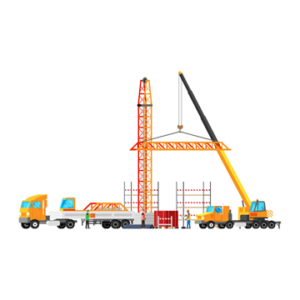
Scaffolding is commonly used in construction for working at heights. It must be erected, inspected, and maintained by competent personnel following industry standards and guidance, such as the National Access and Scaffolding Confederation (NASC) guidance. Regular inspections and supervision are essential to ensure the safety of scaffolding structures.

Working above excavations and trenches also requires special safety precautions. It’s critical to determine the soil stability and type to understand the risks associated with the excavation. Protective systems such as sloping, benching, shoring, or shielding to prevent cave-ins must be installed. These systems should be designed by a qualified engineer. Use appropriate barriers, such as fences or barricades, around the excavation area to prevent unauthorised access.
When collective protection measures are not feasible, personal fall protection systems, such as harnesses and lanyards, may be required. These systems should be properly selected, fitted, and used according to manufacturer instructions and industry best practices.
It is crucial for employers and workers to stay updated with the latest regulations, guidance, and industry best practices related to working at heights in the UK.
We hope that broadened your knowledge on working at heights safety in construction in the UK.
Likewise, if you have a health and safety topic you want the ‘Nail it’ team at Premier Recruitment Solutions to tackle next, email us at info@premierrecruitmentsolutions.co.uk.


